Rawan's Middle Eastern Fiction Reading Group
Thursday 4th June, 7pm
Topping & Company Booksellers of Edinburgh, 2 Blenheim Place, Edinburgh EH7 5JH
6.45pm
7pm
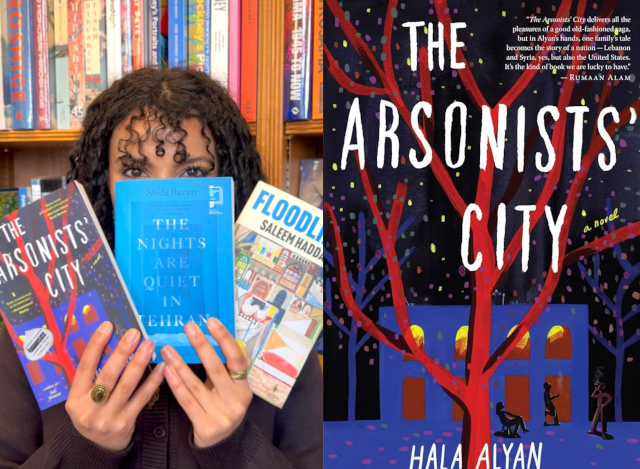
Welcome back to the final installment of the Middle Eastern Fiction Reading Group! We will explore powerful and complex voices from the Middle East, both contemporary and classic, from a region that has an ancient, rich literary tradition. The novels selected illuminate issues of identity, exile, resistance and belonging, told by authors whose work challenges and enriches our understanding of the Middle East and its people.
In June, Rawan has selected The Arsonist's City by Halaa Alyan. A rich, sprawling family saga, a personal look at the legacy of war in the Middle East, and an indelible rendering of how we hold on to the people and places we call home
The Nasr family is spread across the globe—Beirut, Brooklyn, Austin, the California desert. A Syrian mother, a Lebanese father, and three American children: all have lived a life of migration. Still, they’ve always had their ancestral home in Beirut—a constant touchstone—and the complicated, messy family love that binds them. But following his father's recent death, Idris, the family's new patriarch, has decided to sell.
The decision brings the family to Beirut, where everyone unites against Idris in a fight to save the house. They all have secrets—lost loves, bitter jealousies, abandoned passions, deep-set shame—that distance has helped smother. But in a city smoldering with the legacy of war, an ongoing flow of refugees, religious tension, and political protest, those family secrets ignite, imperiling the fragile ties that hold this Lebanese-American family together.
"Tonight the man will die. In some ways, the city already seems resigned to it, the Beirut dusk uncharacteristically flat, cloudy, a peculiar staleness rippling through the trees like wind. It's easy to costume the earth for grief, and tonight the birds perched upon the tangled electricity wires look like mourners in their black and white feathers, staring down at the concrete refugee camps without song. There are orange trees in the courtyard, planted by the children the previous year; the NGO workers had wanted something bright and encouraged the youngest children to tie cheap ribbons to the branches, but they'd forgotten about the muddy season, and now the ribbons flap limply, streaked in dirt.
The man himself—Zakaria—knows it, or doesn't. He notices the queer feeling of the camps, the way his mother's makloubeh tastes perfectly fine but seems to be saltless, the meat stringier than usual. His sisters are gathered in the living room, cross-legged on the carpet, his mother's mother's carpet, the one that earned them a cuff on the ear back when they were children if they dropped crumbs or spilled Coke on it. You think my mama, Allah rest her soul, Allah take her and Allah keep her, hauled this on her back, her back, all the way from Jerusalem to Ramallah to Amman to this godforsaken armpit of the world so that her heathen grandchildren could spill soda on it? His mother hates the camps, hates Beirut, all of Lebanon, hates their neighbors, the aunties with their tattling and boring lives, always reminding her children, We used to have gardens in Palestine, trees that belonged to us."