World Literature Reading Group
Sunday 12th April, 7pm
The Library at The Raven, 7 Queen St, Bath BA1 1HE
6.30pm
7pm
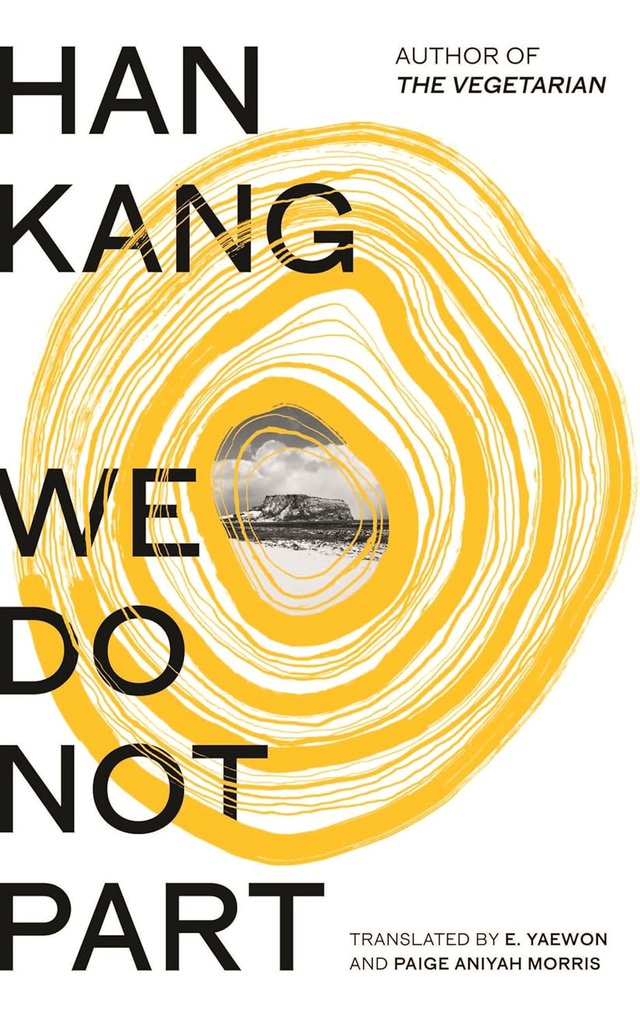
Our World Literature Reading Group aims to showcase literature written outside of the anglophone world. On this journey we will make a variety of stops in Asia, Africa, the Middle East, the Caribbean, Latin America, and Oceania, tracking down the masterpieces that might have otherwise been overlooked. In this tenth group, we will read and discuss Han Kang’s We Do Not Part.
One winter morning in Seoul, Kyungha receives an urgent message from her friend Inseon to visit her at the hospital. Inseon has injured herself in an accident, and she begs Kyungha to return to Jeju Island, where she lives, to save her beloved pet—a white bird called Ama. A snowstorm hits the island when Kyungha arrives. She must reach Inseon’s house at all costs, but the icy wind and squalls slow her down as night begins to fall. She wonders if she will arrive in time to save the animal—or even survive the terrible cold that envelops her with every step. Lost in a world of snow, she doesn’t yet suspect the vertiginous plunge into darkness that awaits her at her friend’s house.
“Few writers are so unremitting on the subject of pain. [...] Her impulse is compassionate, but it is bound to a concern with beauty and coldness. We Do Not Part is both act of witness and a beautiful poetic object. [...] It is a rare privilege to read a masterpiece so recently crafted, to know that the new prose you are reading (too fast!) will endure. We Do Not Part is an astonishing book.” (Anne Enright, The Guardian)
“There is, perhaps, no novelist working today who seems so devoted to interrogating the epistemic problem of suffering. Not why it happens, but how we live knowing that it is everywhere. Her books, and our engagement with them, carry an almost impossible hope. [...] Han’s work – itself a radical form of outreach and connection, an attempt to feel into the painful lives of strangers – is highly original and moving. Although she refuses to look away from human cruelty, it is her glimmers of hope that are most affecting. The acts of inhumanity she depicts are countered by delicate, miraculous moments that dare to “defy all acts that destroy life”. She seeks out people who have been lost to history, those who died needlessly or violently, and gently awakens them in the reader’s imagination – ensuring that we cannot look away either.” (Megan Walsh, The New Statesman)
Our previous selections include:
Human Acts by Han Kang
Minor Detail by Adania Shibli
A Grain of Wheat by Ngũgĩ wa Thiong'o
Potiki by Patricia Grace
Explosion in a Cathedral by Alejo Carpentier
Men of Maize by Miguel Ángel Asturias
Tamas by Bhisham Sahni
Men in the Sun by Ghassan Kanafani
Egyptian Earth by Abdel Rahman al-Sharqawi
*NOTE THIS BOOK WILL NOT BE PUBLISHED UNTIL THE FOLLOWING DATE: 5/3/2026*