
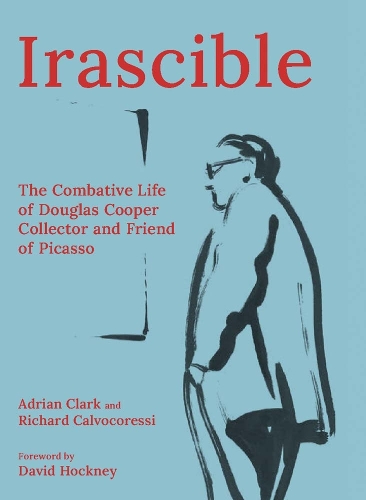
Irascible: The Combative Life of Douglas Cooper, Collector and Friend of Picasso
by Adrian Clark and Richard Calvocoressi
Hardback £45
Published 8th April 2025
You’ll be able to choose Delivery or Click & Collect after you enter your address.
UK postage is £2.95, or free for orders over £60.
UK postage is £2.95, or free for orders over £60.
Available
online
Available
in Bath
Available
in Edinburgh
Available
in Ely
Available
in St Andrews
Description
A pioneering collector of Cubist art, the English art historian and critic Douglas Cooper was one of the most important—and divisive—figures in the international art world of the 20th century
Born into a wealthy family whose money was made in the 19th century in Australia, Douglas Cooper (1911–1984) built up much of his collection of works by Picasso, Braque, Gris, and Léger in the 1930s. He also trained himself to become a respected art historian, his reputation as a scholar resting largely on his catalogue of the Courtauld Collection (1954) and his catalogue raisonné of Juan Gris (1977). He also organised exhibitions of Gauguin, Braque, and two major displays of Cubism. The second of these, The Essential Cubism, co-curated with Gary Tinterow and held at the Tate in 1983, was one of the most remarkable accumulations of Cubist painting, sculpture, and drawings ever brought together.
Based on extensive research and packed with new material and fresh interpretations, Irascible focuses on Cooper’s colourful life and significant accomplishments: his financing and directorship of the Mayor Gallery in London as a young man in the 1930s, when he became close to artists such as Francis Bacon, Paul Nash, Henry Moore, Paul Klee, Joan Miró, and Max Ernst; his wartime experiences as an ambulance driver in support of the collapsing French army in 1940; his job as a senior Monuments Man in charge of tracking down Nazi-looted art in Switzerland; his move to the south of France in the early 1950s, taking his collection with him; and his legendary feuds with leading figures and institutions in the British art world. This book is also the definitive account of Cooper’s collecting, art dealing, writing, and curating.
Born into a wealthy family whose money was made in the 19th century in Australia, Douglas Cooper (1911–1984) built up much of his collection of works by Picasso, Braque, Gris, and Léger in the 1930s. He also trained himself to become a respected art historian, his reputation as a scholar resting largely on his catalogue of the Courtauld Collection (1954) and his catalogue raisonné of Juan Gris (1977). He also organised exhibitions of Gauguin, Braque, and two major displays of Cubism. The second of these, The Essential Cubism, co-curated with Gary Tinterow and held at the Tate in 1983, was one of the most remarkable accumulations of Cubist painting, sculpture, and drawings ever brought together.
Based on extensive research and packed with new material and fresh interpretations, Irascible focuses on Cooper’s colourful life and significant accomplishments: his financing and directorship of the Mayor Gallery in London as a young man in the 1930s, when he became close to artists such as Francis Bacon, Paul Nash, Henry Moore, Paul Klee, Joan Miró, and Max Ernst; his wartime experiences as an ambulance driver in support of the collapsing French army in 1940; his job as a senior Monuments Man in charge of tracking down Nazi-looted art in Switzerland; his move to the south of France in the early 1950s, taking his collection with him; and his legendary feuds with leading figures and institutions in the British art world. This book is also the definitive account of Cooper’s collecting, art dealing, writing, and curating.
Details
Irascible: The Combative Life of Douglas Cooper, Collector and Friend of Picasso
by Adrian Clark, Richard Calvocoressi and David Hockney
ISBN
9780300282696
Publisher
Yale University Press
Binding
Hardback
Publication date
April 8, 2025